
PET bottle labelling machines are an important part of modern beverage and liquid-packaging lines. After bottles are filled and closed, the labelling system applies labels accurately and consistently before products move to packaging, inspection, or dispatch.
Like other production equipment, labelling machines contain mechanical, pneumatic, electrical, and label-handling components that operate continuously during production. Wear, contamination, incorrect adjustment, or component failure can affect label positioning, bottle handling, machine speed, and overall line efficiency.
Using correctly specified PET bottle labelling machine spare parts is therefore an important part of equipment maintenance. The right replacement components can help maintenance teams restore machine operation, maintain consistent labelling performance, and manage planned maintenance requirements.
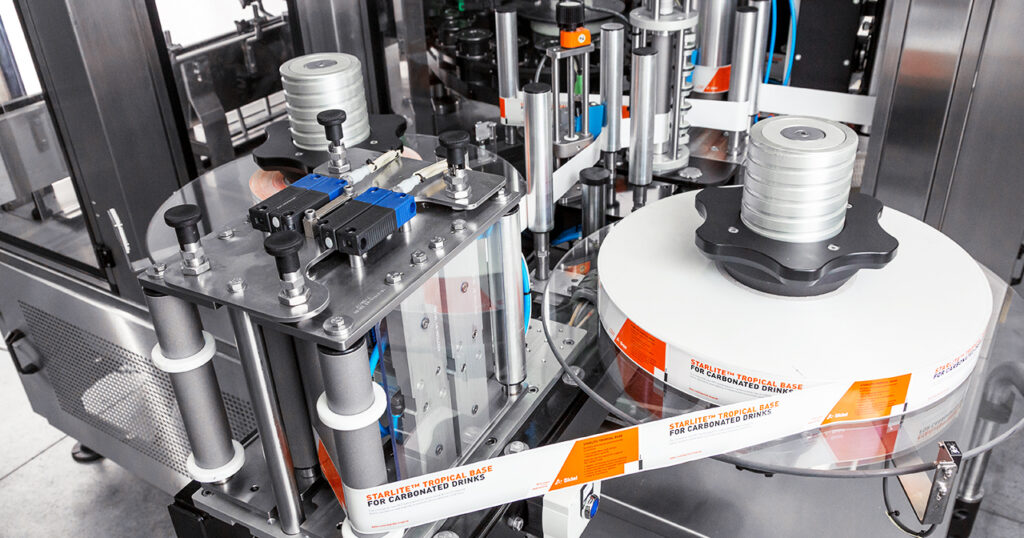
What Are PET Bottle Labelling Machine Spare Parts?
PET bottle labelling machine spare parts are replacement components used to maintain, repair, or restore the operation of labelling equipment used on PET bottle production lines.
A labelling machine contains several assemblies that work together to receive bottles, position them, handle labels, apply adhesive or other labelling media where applicable, maintain bottle movement, and transfer labelled bottles to the next stage of the production line.
Spare parts can therefore range from relatively small wear components to precision mechanical and label-handling components. Depending on the machine design, these may include grippers and gripper assemblies, suction rails, cutting knives, guide components, rollers, bearings, shafts, clamps, springs, pneumatic components, and other machine-specific parts.
The exact spare parts required depend on the labelling technology, machine configuration, bottle format, production speed, and component design.
For industrial maintenance teams, a spare part should not be treated simply as a generic replacement item. Its dimensions, material, interface, tolerance, operating conditions, and application need to be appropriate for the specific machine assembly.
How a PET Bottle Labelling Machine Works
Although labelling systems differ by machine type and technology, the general process involves several coordinated stages.
1. Bottle Infeed
Filled and capped PET bottles enter the labelling machine through the conveyor or infeed system. Guide components help maintain the required bottle position as the containers enter the labelling section.
2. Bottle Positioning and Handling
The bottles are positioned and guided according to the requirements of the labelling process. Grippers, guides, rollers, clamps, star-wheel-type transfer components, or other handling mechanisms may be used depending on the machine configuration.
3. Label Feeding
Labels are supplied from the appropriate label-handling system. The machine controls label movement and positioning so that the required label reaches the application area at the correct time.
4. Label Application
The label is transferred and applied to the bottle using the machine’s specific application mechanism. Depending on the technology, this can involve rollers, brushes, vacuum or suction components, adhesive systems, cutting components, or other application assemblies.
5. Label Positioning and Inspection
The applied label must maintain the required position and orientation on the bottle. Machine guides, sensors, mechanical components, and adjustment systems can contribute to consistent positioning.
6. Outfeed
After labelling, bottles continue through the conveyor system toward downstream inspection, packing, or other production stages.
Because these operations are synchronized, wear in one component can affect other parts of the process. This is why correct maintenance and timely replacement of critical components are important for stable labelling operations.
Major PET Bottle Labelling Machine Spare Parts
PET bottle labelling machines use different components depending on their design and labelling technology. Common spare-part categories include the following.
Grippers and Gripper Assemblies
Grippers and related assemblies help hold, guide, or control bottles and machine components during operation. Their condition can affect bottle positioning and transfer accuracy.
Suction Rails and Vacuum Components
Suction or vacuum-related components can be used in label handling and transfer systems. Proper operation depends on the condition of the rail, sealing surfaces, connections, and associated components.
Rollers
Rollers can support bottle movement, label handling, or other mechanical functions depending on the machine design. Surface wear or incorrect alignment can affect smooth movement and positioning.
Bearings and Bushings
Bearings and bushings support rotating or moving assemblies and help maintain controlled mechanical movement. Wear may lead to noise, vibration, increased play, or inconsistent movement.
Guide Components
Guide rails, guides, wear components, and similar parts help maintain the required movement and positioning of bottles or machine assemblies.
Pneumatic Components
Depending on the machine configuration, pneumatic cylinders, valves, fittings, tubing, and other components may be used for controlled machine movements.
Sensors and Switching Components
Sensors may be used for bottle detection, position monitoring, label detection, or machine sequencing. Their signals can be important to automated operation.
The exact component list should always be determined from the specific labelling machine and assembly, rather than assuming that every machine uses the same spare parts.
Common Wear Parts and Their Functions
Not every labelling-machine component has the same service life. Parts exposed to continuous movement, friction, pressure, contact, or repeated cycles generally require closer inspection.
Grippers and guide components can experience mechanical wear through repeated bottle handling. Bearings and bushings can wear as a result of continuous rotation or movement. Rollers and wear surfaces may gradually lose their required condition through repeated contact.
Cutting knives can lose cutting performance through repeated use, while seals and pneumatic components can deteriorate depending on operating conditions and maintenance practices.
The actual service life of a component depends on factors such as production speed, operating hours, mechanical load, cleaning procedures, lubrication, environmental conditions, installation, and component quality.
For this reason, replacement intervals should be based on machine requirements, inspection results, maintenance history, and manufacturer or supplier recommendations rather than applying one fixed interval to every spare part.
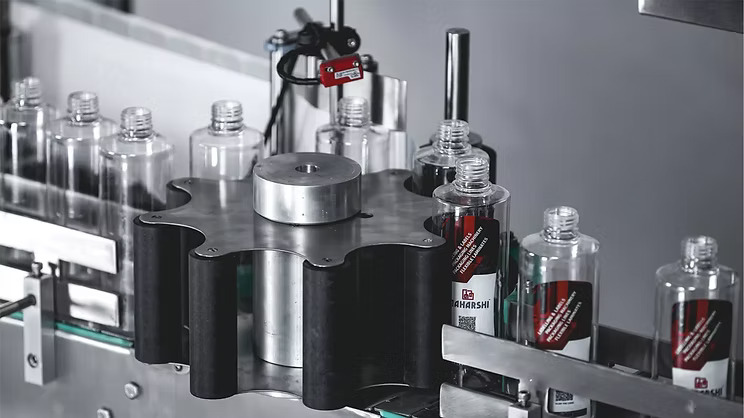
Signs That Labelling Machine Parts Need Replacement
Several operational changes can indicate that a component requires inspection or replacement.
Common signs include:
- Inconsistent bottle positioning
- Labels being applied unevenly or incorrectly
- Repeated label-feed problems
- Increased machine vibration or unusual noise
- Excessive mechanical play
- Frequent bottle jams
- Irregular movement of rollers or guides
- Pneumatic movement becoming slow or incomplete
- Cutting performance becoming inconsistent
- Repeated sensor or machine alarms
- Increased adjustment requirements
- Visible wear or physical damage
These symptoms do not automatically identify a particular failed component. A proper inspection should be carried out to determine the underlying cause.
OEM vs OEM-Alternative Labelling Machine Spare Parts
OEM and OEM-alternative labelling machine spare parts differ primarily in their source, manufacturing responsibility and specification pathway. OEM parts are supplied through the original equipment manufacturer and follow the manufacturer’s established specifications and supply system. OEM-alternative parts are independently manufactured and supplied by another company under its own brand and should be evaluated based on technical compatibility, dimensions, materials, tolerances, application requirements and supplier quality processes.
For labelling equipment, selecting an OEM-alternative part should involve more than matching a part number. Maintenance and procurement teams should verify the machine model, component dimensions, mounting interfaces, material requirements, operating conditions and functional requirements before replacement. Supplier quality controls, inspection procedures, traceability, warranty, availability and technical support should also be considered.
Vikram Solutions supplies OEM-alternative spare parts under its own brand and explicitly states that it does not represent or supply original OEM spare parts. Its product platform supports part-number-based identification and quotation requests, while its stated quality processes include dimensional accuracy control, material verification, performance validation and traceability.
Key takeaway: The important question is not simply whether a part is OEM or OEM-alternative, but whether the selected component has been properly identified, technically evaluated and supplied with appropriate quality and support for the specific labelling-machine application.
How to Choose the Right Labelling Machine Spare Parts
Selecting a labelling-machine spare part starts with identifying the exact machine and component.
Provide the machine manufacturer, model, part number, reference number, drawing, dimensions, photographs, or sample wherever available. This information can help establish the required component and reduce the risk of ordering an unsuitable replacement.
Dimensions and interfaces should be verified carefully, particularly for mechanical components such as shafts, rollers, grippers, guides, bearings, and cutting components.
Material selection is also important. The material needs to be appropriate for the component’s operating environment, including mechanical loads, temperature, cleaning procedures, and contact conditions where applicable.
For critical components, buyers should also consider the supplier’s quality controls, material verification, dimensional inspection, performance checks, traceability, technical support, and supply capability.
Vikram Solutions states that its quality processes include dimensional accuracy control, material verification, performance validation, traceability, and post-delivery technical support.
Why Choose Vikram Solutions for Labelling Machine Spare Parts?
Choosing the right labelling machine spare parts supplier requires more than matching a part by name. Compatibility, dimensional accuracy, material quality, and reliable supply are essential for smooth machine performance.
Vikram Solutions provides OEM-alternative spare parts for PET blowing, filling, and labelling machines, backed by engineering experience dating to 1988 and precision manufacturing processes.
Key Advantages

- OEM-alternative parts for bottling and packaging machinery
- Part identification support using part numbers, drawings, dimensions, or photos
- Quality-focused manufacturing with dimensional and material verification
- Traceability and performance validation
- Global supply support for maintenance and procurement teams
Need the right labelling machine spare part? Share your part number, machine model, drawing, dimensions, or component photo with Vikram Solutions to request a quotation.
Related Products
- Anti-Rotation Systems for Cappers
- Labeller Suction Rails & Cutting Knives
- Rollers & Bearings
- Bellows
- Grippers & Gripper Assemblies
- Sealing Components
- 8F931517503, C700RICAM0003 Pneumatic Components
Looking for the Right Spare-Part Solution for Your PET Bottle Labelling Line?
For bottling plants, maintenance teams, and procurement departments, sourcing the right replacement component involves more than finding a similar-looking part. Technical compatibility, accurate identification, consistent quality, and supply availability all contribute to an efficient spare-parts procurement process.
Vikram Solutions supplies OEM-alternative spare parts for PET blowing, filling, and labelling machines, supported by engineering expertise, quality processes, part-identification assistance, and international supply capabilities.
Send your part number, machine model, technical drawing, dimensions, photograph, or sample to Vikram Solutions for technical review and a quotation.
Email: sales@vikramengineering.com
Phone: +91 97378 72978 | +91 84690 14508
